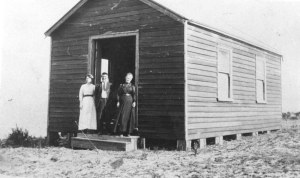
James Robinson

James Robinson or Jimmy Holt, either/or……..the same person, our Grandfather and Great Grandfather! He is well-known by the two names and I often use both. Dad only ever uses Jimmy Holt as this is the history handed down to him by his father Horace also known as Horace Holt for a fair period of his life. We only ever heard stories about Jimmy Holt and his mother was always Meg Youl. A decision to photo copy James Masters Mariners Ticket – along with a few other documents as Christmas gifts last year, evolved into our family research and hasn’t stopped since!!

The tricky subject of James birthdate –  what’s written on his Masters ticket and Masters application doesn’t fit  with the 1858 birth certificate. IMG_5247 IMG_5248 Naturally I thought this was Jimmy’s original ticket – all became clear in the Hobart History Room, finding it was a duplicate and reissued in 1891 and has fold marks, probably kept in his wallet. (The original (and duplicate) application and examination was signed by James Riddle, great-uncle of Bill Riddle Senior who bought the Robinson home at Badger Corner in 1930’s.) IMG_0063 References for these documents – certificate No 52.

This information is direct from Jimmy Holt himself……… birth date, place and address…… Little Dog Island in Badger Strait. (Interesting…… Badger Strait) The specifications of the Elizabeth (built by William Brown, Cape Barren Island) the other boats he had been employed on.

Thank you Jimmy for this information. When I first read like others before me, a son had been born in Georgetown  24/9/1858 to Samuel Robinson and Mary Devine, thought it possible the registrar (registered 6/10/1858) may have mis heard Dwyer and why we see Devine.

The baptism certificate for this same child on November 3rd 1858 states the child’s name was ‘David’ parents named as Samuel and Mary Robinson, no reference to maiden name. As the dates fitted this would suggest the child was James Robinson.

However when I was examining his Home Trade Ticket, the glaring inconsistency was DOB, 1851, the dates didn’t fit with his parents history. Was James was the eldest of the brothers not the youngest. Did Samuel Robinson have another son in Georgetown with another woman called Mary and possibly the crux of his sudden departure in January 1859.

A trip to Carr Villa to photograph the headstone.

James died in February he hadn’t turned 75, taking this into account he was born in 1851. IMG_5222

Elizabeth Prest’s Will names James first, although William and John are around the wrong way. Again James marriage certificate – states in 1881 he was 29 years of age, again 1851. There is a variable of 7 years working on 1851 and 1858. James applied for his Home Trade Ticket in January 1875 –  James Holt states he started working on the ‘Blackbird’ in 1866, making him 15 or 16 as a boy and worked for 8 years in the trade, bringing his age to 23. James and his mother Elizabeth Holt owned the ‘Elizabeth’. If he had been born in 1858 – he would have started working at 8 and applied for his masters ticket at the age of 16. In this case he would have become the Master of the ‘Blackbird’ when he was 10. My youngest nephew has just turned 10…… ludicrous to consider he could be employed as a Master or even as a boy at this age, (no offence, Will, I think your parents would agree). The book Mission to the Islands published by Stephen Murray Smith also supports the 1852 theory – Smith researched and presents information about the local identities from Cannon Brownrigg’s work.

The answer I suspect is with Meg his mother who arrived in the Colony in 1853. I wonder if James chose his brothers, did Meg leave 2 boys at the orphanage and 12 months later leave with 3 boys. Would love to hear other ideas about this……..
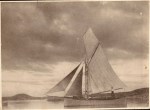
Meg Youl – a collector of names! (1)

Meg – a colourful character!!

Firstly…….Samuel Robinson – the oral history we have handed down is fairly grim. James was up front with his sons and used to say he was ‘no good’ and this was always strongly emphasised, still evident when Dad talks about Samuel. When the boys where very young they had a really rough life, really rough, and this can be seen by the time spent in the Orphanage. Between the three boys they had 37 children, Samuel was not a name afforded to any of their sons, whereas Elizabeth was used by the three sons for their daughters, clearly a statement!!

Secondly – How does James fit into the scheme if he was born in Hobart 1951 – an element of intrigue of our history!!

Thirdly – why did Mary Elizabeth Dwyer come to Launceston in the first place? What compelled this young woman of 23 to relocate the end of the earth in big old sailing ship as a free agent?? Did she follow a relative out here, maybe a convict parent or sibling, and is this where James fits in??

Imagine my surprise to see a picture of Meg in the William Robinson/Holt history folder at the Emita Museum when I visited two weeks ago.There is also a picture of John Holt her husband. I will revisit this when I go home in a few weeks………. rock on November.

Meg died in the house she rented from Catherine Prest at 37 York Street in Launceston – directly opposite my work place. 37 York St is now a private car park and I have for the past nine years walked past each day on my way to work. I often spare a thought for the times she must have also walked this same spot!

The tale of the Coogee and the Olive Maud!! Old rivals of the Straits.

IMG_0029

The tale of two old rivals the ‘Coogee’ and the ‘Olive Maud’. The ‘Coogee’ and the ‘Olive Maud’ wooden cutters built on Cape Barren Island. Richard Davey (Apple Orchard) built the Coogee and William Brown built the Olive Maud. Both gentlemen were well-known boat builders in the Straits in the day,

James Robinson bought the Coogee from Richard Davey and traded throughout the straits for many years, there are many stories  about these adventures. James previously owned the Elizabeth, built by William Brown, the Elizabeth was stranded on Swan Island as you can read at the end of this article which incorrectly states she was a ketch, she was re floated. James sold the Elizabeth to Alf Briant and wrecked on rocks in May 1882 off Cape Barren.. James also owned the Waratah, presumably after the Elizabeth and before the Coogee.

Its official‘ the Coogee……. is the fastest cutter in the Straits.

Extract from ‘Bishop Montgomery June 1894 – printed in the ‘Church News” August 1894 and on page 124 as follows

But I was not present at these proceedings an hour after the wedding I had embarked  in Mr W Brown’s “Olive Maud”, a regular clipper with Messrs. Brown and Burgess as crew, on my way to Flinders Island. The Olive Maud is one of the fastest of the Straits boats, of nine tons, and supposed to be second only to Mr Davey’s “Coogee” in speed. I found her sailing powers all that could be desired, and even the 12 miles we made from the school township to Green Island could not have been effected by many other boats in the seven hours we took against a light wind and strong tide’.

Dad was amazed when I located the Examiner clipping, he had known about Bishop Montgomery’s reference for a number of years confirming the Coogee was faster than the Olive Maud. Apparently his father, Horace and  Mr Riddle (Snr) used to argue the toss about which was the finest and fastest. Horace was a supporter of the Davey built boats and Bill Riddle the Brown built boats (early version of the Holden and Ford contests) These articles also validate the accuracy of the oral history passed along the generations.

I wonder if any Davey descendants have any information about the  year the Coogee was built and when Dick sold to her James and the Brown’s, any information or photos of the Olive Maud?

Emily left the ‘Coogee’ to John, Cecil (Dick) and Horace, known as Robinson Bros – ‘HJC’.

Robinson Bros eventually sold the Coogee to a game fisherman in Victoria, the decks were renovated, her fate revealed in this article.

Flinders views  houses 14-09-09 055

Bishop Montgomery June 1894 – Visit to the Furneaux Group.

Extracts from Bishop Montgomery – who also visited in 1893. On this 6 day visit (1894) Bishop Montgomery stayed with Dad’s maternal and paternal, grandparents and two sets of great grandparents that is  – Harry and Adeline (1&5), James and Emily (3&5), Henry and Hannah Collis  including the ‘Willetts’ Ed and Maria (1&3),(2), also his Great Uncle William and his wife (James brother)and Ellen (4) on Cape Barren.

‘Extracts’ from – CHURCH NEWS for the Diocese of Tasmania August 1894

VISITATION OF THE FURNEAUX ISLANDS JUNE,1894 –  Bishop Montgomery

1) ‘It was announced to the expectant public that the daughter of the school-house was to be married at 9.30 to Mr. Henry Briant, owner of the “Furneaux” cutter, and now a would be farmer on Flinders. It was also announced (with a fatal coincidence) that the bride and bridegroom were to set sail for their new home directly after the ceremony. It is needless to say that the church was crowded to witness the first marriage in the Church of Epiphany and to see the Bible given away which had been promised on the occasion’

The couple were made man and wife amid the solemn silence of the devout congregation. But once they were outside the church the scene became exciting. From the church door I beheld white clouds discharge themselves upon the devoted pair, and learnt it was rice.’

‘In about half-an-hour the bridegroom went to his ship to get under weigh. He soon returned, and his looks told us something was wrong. If the truth must be told, a band of youths was absent from the church, a band who had vowed that the happy pair should not depart until they had joined in an evening dance at the township. The cutter had lost her jib and staysail. The bridegrooms other boat had no rudder, and no peak halyards nor could searching discover them anywhere. Even if they had found the missing articles, I am told that it had been determined to drag the ship back to her anchorage, and good sailors were there by the dozen to make escape impossible. The two who were most concerned took the whole thing thoroughly well, and were greeted with a cheer when they confessed themselves beaten. The dance was held, and at 1030p.m., under a brilliant moon, the newly –married pair sailed away to Badger Corner.’

2) ‘Mr. Collis’ hospitable house was reached by 5p.m. another service of baptism followed, two children being brought forward.  Then, after a merry meal, we started for a moonlight walk to the old settlement of the aborigines, where Mr. Willett now resides. Family prayers were conducted in due time, and once more enlivened with the merry stories of our old schoolmaster friend we returned to his house, and I obtained a real bed to sleep in, a luxury we do not expect often in the Straits.’

3) ‘We had to fly before the wind to Badger Corner through the long channel south of the Flinders Peaks. Oilskins were now in requisition, and ere we reached our anchorage we were becalmed. The darkness was settling down upon us as we landed at Mr. James Holt’s, but I thought it best to push on at once to Mr. Stephens’ new farm, some two miles back in the bush. Through open flats and fantastic grass trees we splashed our way until the aspect of the country changed, and trees of good growth were reached. Here, near the confluence of two creeks, is Una Vale, the property of Mr. Stephens. Nor do I think I have ever heard of a more wonderful record of energy than that which was unfolded to me by Mr. Holt of the way in which, during a few week’s holiday, Mr. Stephens put up a four roomed house two miles from the sea, all the material being carried up, or wheeled up in a barrow, along a rough bush track. Even the iron for the roof was carried up on the heads of the girls of the family.’

4) ‘I have not yet alluded to the fishing company which came from Melbourne to Flinders with a steamer to take their fish to market. Its fate was not fortunate. The fish were plentiful enough, but the venture failed; and though I saw the spot where they camped the region is given up once more to the wallaby: it is to many miles from Badger Corner, but in the channel between the two great islands. One night at the township Mr. W. Holt threw his net a couple of times into the boat harbor, and we watched with interest the landing of between 30 and 40 dozen garfish-a feast of course for the whole community. And now that the works are done, there came over me the usual feeling of anxiety. When could I hope to get away?’

5) ‘At length we bethought ourselves of the bridegroom at his farm far away, and of his large cutter. Perhaps he would take us back to the mainland. So we departed once more for Badger Corner. That night Mr. James Holt fed us wallaby and gave us the best accommodation he possessed. I slept that night on six chairs, and slumber was sweet. The next day we tried our utmost to reach the school-house. The bridegroom left his bride and sailed the “Furneaux” to the best of his ability, and Charles Stephens ably seconded him, but we took 19 hours getting over 15 miles of sea. Anchored that night, and waiting for the tide to turn, I saw a sight, which made us explode with laughter. It was about 3 a.m., and bitterly cold. We had laid down in our clothes, prepared to sail at the first opportunity, and when I put my head up on deck I beheld Mr. Briant cowering over a fire-pot, and looking the picture of misery. So miserable was his appearance that there was nothing left to do but to woken the echoes on the dim shores hard by with laughter as I pointed to the “happy bridegroom.” Nothing could really have been more brutal, since it was I who had torn him from his home. But at length our day came, and on Friday, June 29. After six days of waiting (I hope of patience too), the “Furneaux” started for Cape Portland. In 4 ½ hours we were in the boat harbor of the Cape, and in a short time we too (my boy and I) presented ourselves to Mrs. Bowne’s as occupants for a lodging.’

St Barnabas Church – Badger Corner

IMG_0143

When this picture is enlarged it’s….. magical!!  You can enlarge on the ‘About’ page. I am certain James (James ‘always’ wore a bowler hat which he was renowned for) and Emily are on the left of the Clergy. Hard to pick anyone specifically. Walter, Maud, Elsie and May would have been about 9, 7, 5 and 3. Tuck, Dolly, Horace and George would have been 27, 18,17 and 15. Edith was 29, of course not there as she was living in New Norfolk.

Extract from the August 14th 1914 – Church News by Rev Hughes.

after dinner, there arrived from Badger Corner four miles away, an old friend of Bishop Montgomery’s and a faithful son of the church in the person of Mr. Holt who drove Mrs Hughes and myself to his home, the chaplain footing it. Early next morning (St Barnabas’ Day) we had a celebration, and afterwards made arrangements for the laying of the foundation stone (or rather a post) of what is to be a church pure and simple and dedicated to St Barnabas’. St Barnabas was officiated early 1915.

James and Emily Robinson donated the land and labour to build St Barnabas at Badger Corner. On this day when this photograph was taken 11/6/1914, stood two families celebrating a significant milestone within their small community…….. not realising that 27 years to the future they would be forever related when (my Grandparents) Horace and Maud marry in 1936  and by late November 1940 they become parents and in 1962, 63 and 1966 Grandparents………… and so on it goes!

The church was moved to Lady Barron after Emily died, unsure of the year. I found an article in 1932 where a wedding took place at St Barnabas in Lady Barron, so sometime between 1929 and 32.

James and Emily still have a strong family connection with St Barnabas through one of their Great Granddaughters.

James and Emily on the steps of the Church at Badger Corner. Daughter Louie on the left.

When you magnify this picture and look at James the resemblance to cousin Rob is remarkable.

Henry Briant Baptism @ Badger Corner